
A little over two weeks ago my refrigerator stopped cooling. Catastrophically. Everything in the freezer thawed.
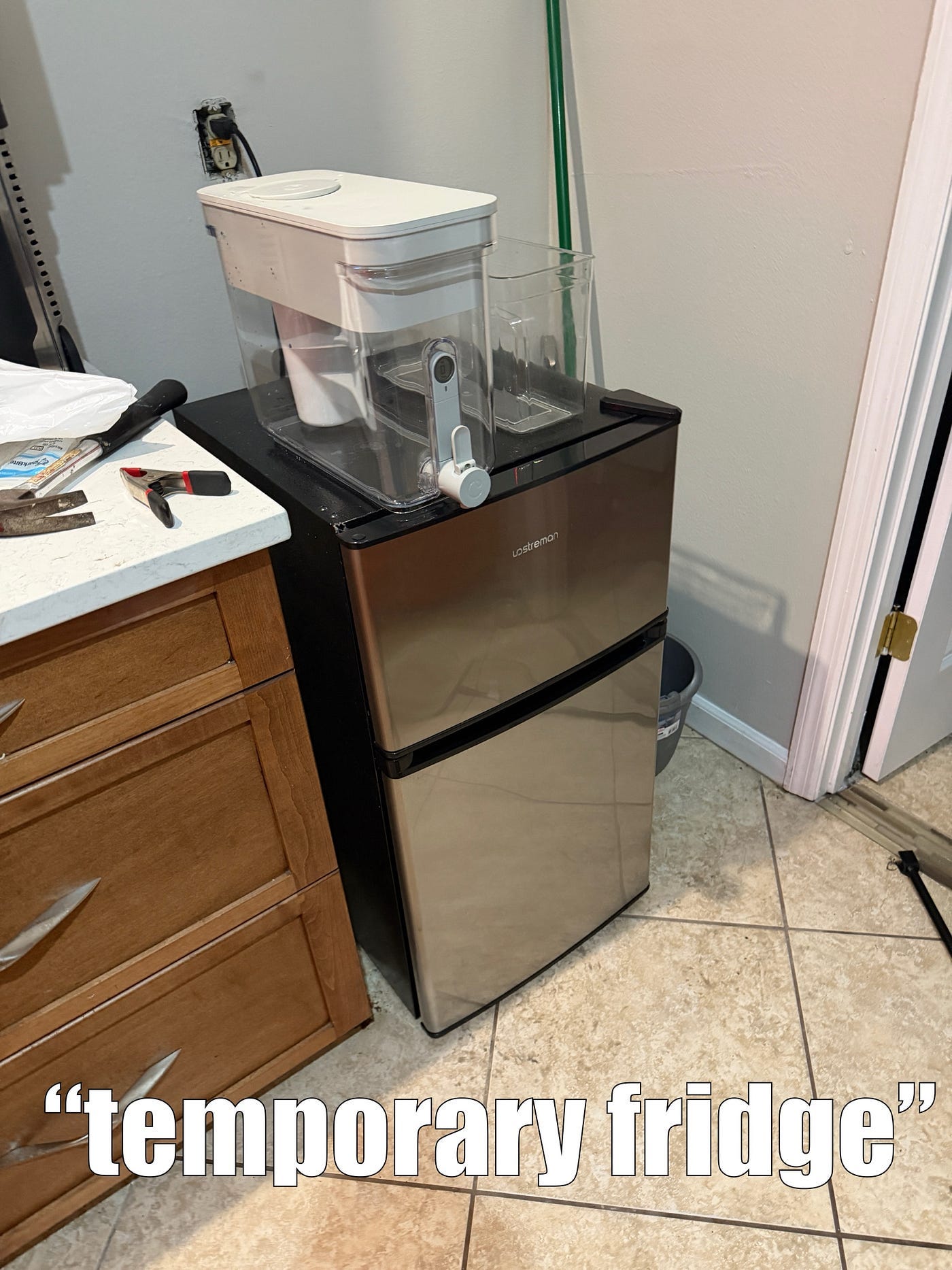
As a renter, this is the kind of problem that’s supposed to be simple. I opened a maintenance ticket through my landlord’s online system. The company, FirstKey Homes, advertises a streamlined digital support experience for residents.
FirstKey Homes isn’t just a traditional landlord. It’s part of a large institutional housing portfolio owned by a private-equity firm. When housing becomes an investment asset at scale, systems and metrics inevitably replace the small, human feedback loops that used to exist between tenants and landlords.
To their credit, the response was quick. A technician arrived the next day.
He looked at the fridge, diagnosed the problem, and said he needed to order a part.
Reasonable enough.
Then he left. And the ticket was closed.
Not updated to “waiting for parts.” Not “in progress.”
Closed.
The system now showed the issue as resolved.
Except the refrigerator still didn’t work.
And because the ticket was closed, the system required opening a brand new request just to ask what happened to the first one.
Then something even stranger happened.
An automated email arrived asking me to rate the quality of the service I had just received.
The refrigerator was still broken, but the system was already measuring customer satisfaction.
So I rated the service very low — not because the technician was rude or the response time was slow, but because the problem hadn’t been solved yet.
Inside the company’s metrics dashboard, the interaction had already been counted as a success. Fast response time. Ticket closed.
From the customer’s perspective, the company had simply declared victory and moved on.
But the system had been optimized to close tickets, not solve problems, and that distinction matters more than most companies realize.
The Two Brands Every Company Has
Every company operates two brands.
The first is the marketing brand — the polished version. Website copy, ads, social posts, that reassuring tone promising *we care about our customers.*
The second is the operational brand.
This one lives in support queues, billing systems, ticketing platforms, and frontline employees trying to navigate policies they didn’t write.
Customers meet the marketing brand first.
But they believe the operational one.
Because marketing is what a company says.
Customer experience is what a company does.
When the Brand Breaks
The fracture usually happens quietly.
A customer has a real problem. They contact support. A process begins.
Then the system starts optimizing for metrics instead of outcomes: Tickets get closed early. Cases get transferred. Departments hand problems to each other like a hot potato.
Internally it looks efficient, but externally it feels like abandonment.
Anyone who has spent forty-five minutes on hold with a telecom provider — transferred twice, asked to repeat an account number three times, then disconnected — knows the feeling.
The company didn’t refuse to help.
The system just wasn’t built to.
The Corporate Blind Spot
This is where the real problem lives: Marketing teams are measured on leads, clicks, impressions, and conversions.
Operations teams are measured on tickets closed, call handle time, and queue reduction.
Notice what’s missing?
No one is measured on whether the customer’s problem was actually solved.
An organization can hit every internal target and still leave customers worse off than before they called.
Marketing reports record engagement.
Support reports record ticket closures, and yet the customer is still staring at a broken refrigerator.
The metrics say everything is working.
The customer says nothing is.
The Replacement Customer Trap
When companies damage customer trust, something predictable happens.
Customers leave.
Instead of fixing the underlying experience, many companies respond by increasing marketing spend.
More ads.
More campaigns.
More lead generation.
In effect, they start buying replacement customers for the ones they just burned.
Marketing Spend → New Customers → Poor Experience → Customer Loss → More Marketing Spend
The marketing department gets busier.
The brand gets weaker.
Why Good Marketing Makes This Worse
The better the marketing, the harder the backlash when the experience fails.
Because great marketing raises expectations.
If your brand promises white-glove service but delivers bureaucratic indifference, the gap doesn’t just disappoint: It feels like a lie.
And disappointed customers talk.
A quiet bad experience becomes a one-star review, a Reddit thread, or a group chat warning. The marketing team may never see it in their dashboard, but it shapes the brand far more than any campaign.
The Companies That Get It Right
The companies that avoid this trap treat marketing and operations as two halves of the same promise.
If marketing says *we care about our customers,* the operational systems have to make that real.
Support tickets stay open until the issue is resolved — not until a timer runs out.
Customers get proactive updates.
Frontline employees have the authority to fix problems without escalating through layers of bureaucracy.
And success is measured by whether the customer’s situation improved — not by how quickly the interaction ended.
This isn’t a problem unique to FirstKey Homes, it’s a system design failure that repeats across industries — telecom, insurance, property management, SaaS — anywhere the dashboard becomes more real to the company than the customer’s experience.
The experience has to match the story.
That’s not just a slogan, it’s the whole job.
The Real Brand
Companies often believe their brand is built through advertising. It isn’t.
Advertising creates the opening line of the relationship, but the real brand is built in the quiet moments that follow:
When something breaks.
When a customer asks for help.
When the system is tested.
Marketing creates the promise.
Operations decides whether it was a lie.
When the Measure becomes the KPI: At 16, I worked at McDonald's. My store manager, Kevin was a short, fat, bald man in his mid 40's who really took his job serious. Every once in awhile the company would start leaning on their franchisers to drive through times. So when customers had special orders, or things were just taking too much time on Kevin's shifts, he would write the orders down and clear them as paid and gone in the system. You could do that because it was the 80's and nobody would pay for McDonald's with a Visa card. That would be stupid. This invariably lowered his times, but also caused chaos. I mean we were a group of a dozen ferel teenagers with limited math skills. But when the company leaned on measuring drive-thru times, it became the only key performance indicator he cared about. Not customer satisfaction. Not order accuracy. Not a working fridge.