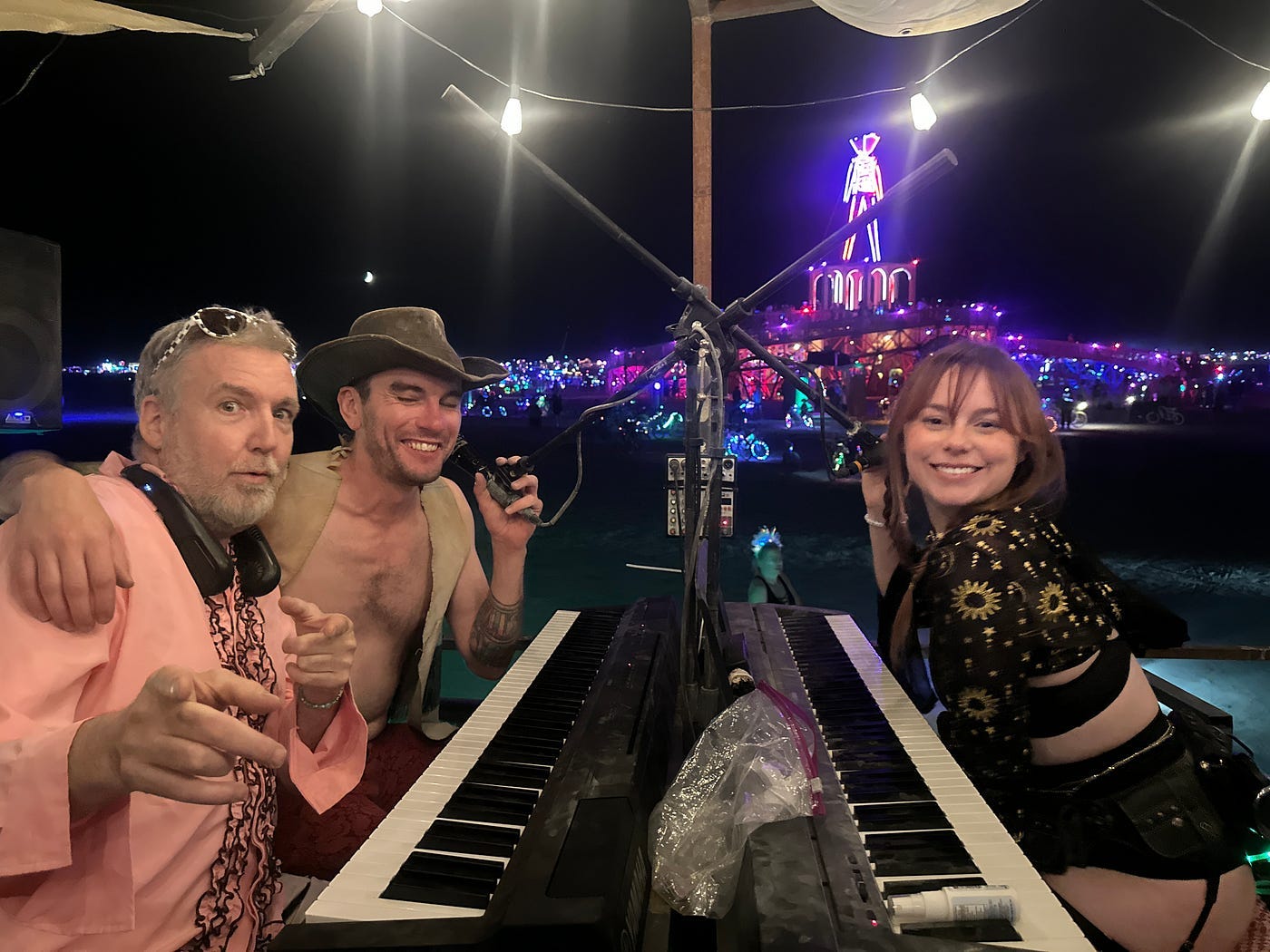
My first Burning Man was in 2012.
Even then, many of the oldest-school Burners had already decided Burning Man had jumped the shark long ago. It had become too popular, too expensive, too mainstream, too commercial. And with bigger crowds came more rules. Less chaos, more organization, more law enforcement.
Then came smartphones and unprecedented connectivity to the default world. And with the iPhones came the often lamented invasion of Instagram Models, eager to use the Black Rock Desert as their personal photoshoot backdrop.
Depending on who you asked, the real Burning Man ended around 1998, or 2004, or the year before they arrived.
“It was better last year” got repeated so often that Burners turned it into a time-travel joke: “It was better NEXT year.”
2012 was also peak ticket scarcity. Getting a ticket was the biggest hurdle to going, and scoring one felt like winning a small lottery.
“Going to Burning Man” became a bucket list item for people all over the world.
Many people attend once and return to the default world with a unique, sometimes life-changing experience. Others, myself included, get drawn in and return each year to help create the event.
In 2012 I was invited to join an established theme camp called Papa Legba, a group of mostly telecom geeks who spend their week in Black Rock City building infrastructure… specifically, communications infrastructure. (I gave a talk about it at HOPE X in 2014: Building an Open Source Cellular Network at Burning Man.)
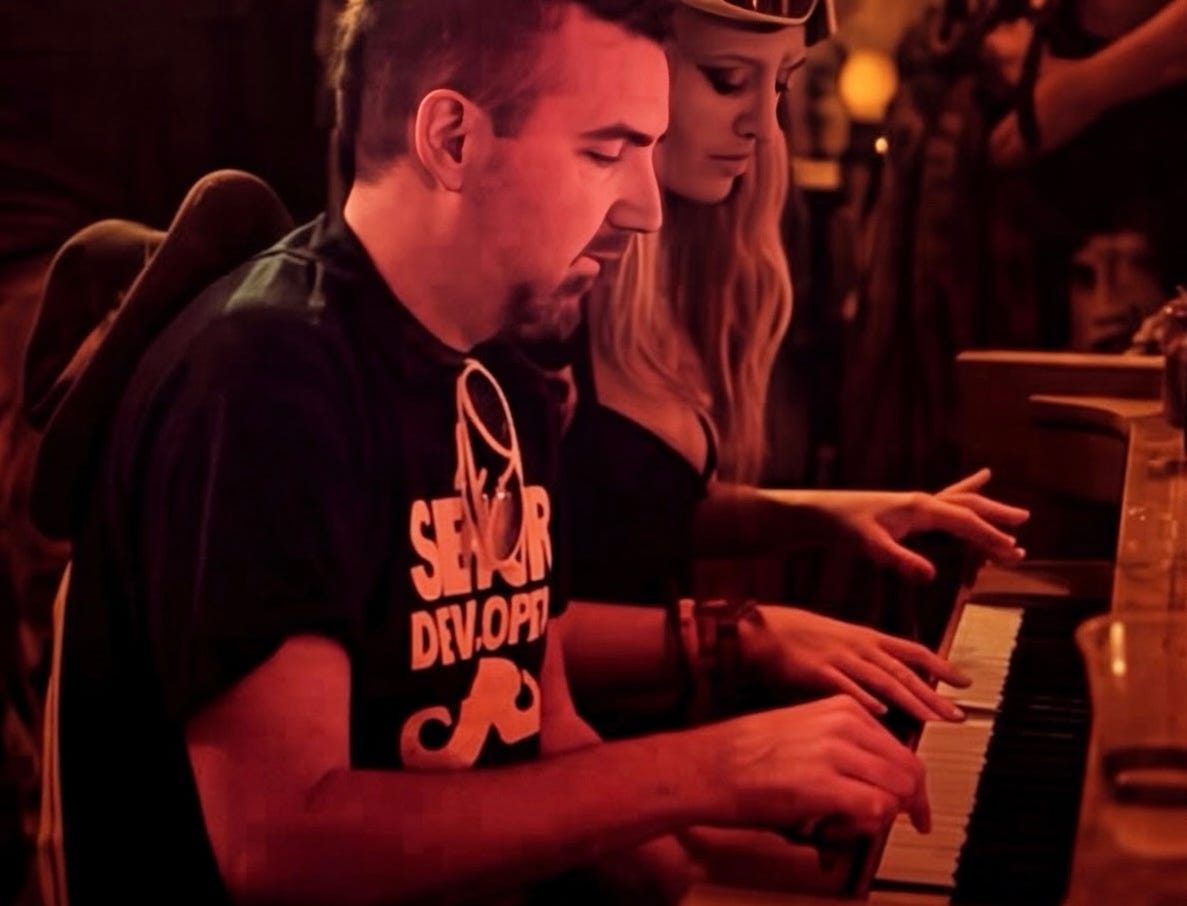
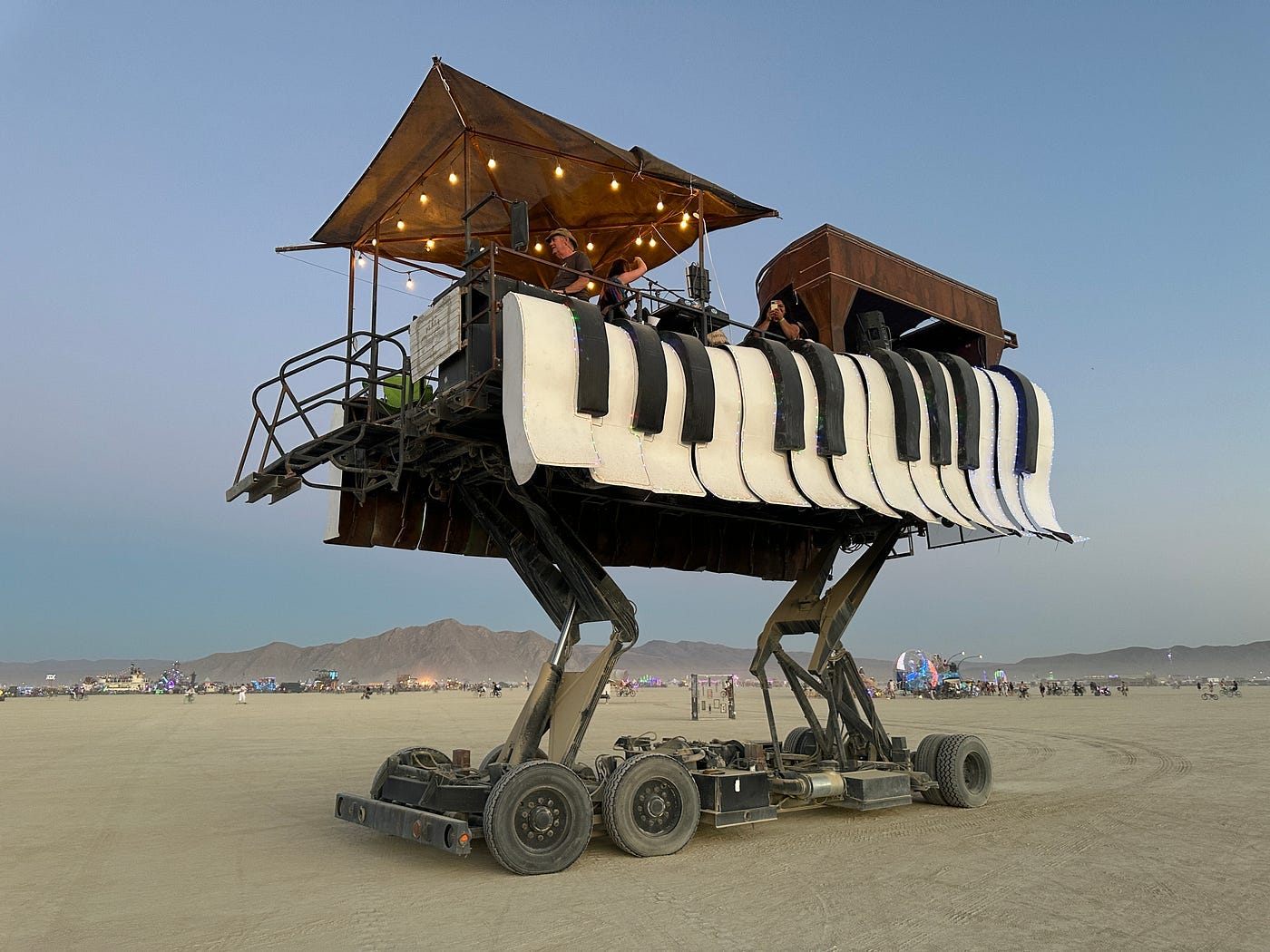
That first year I also discovered that some crazy Burners haul real pianos out into the middle of the desert. As a piano player, I was so tickled by this novelty that I set out on a mission to play every one of them over the course of the week (a task I daresay I completed).
On the last day of my first Burn, the Sunday after the Saturday-night party that is the actual burning of the Man, I found myself at a rooftop bar called the Baba Deck, perched on top of a big yellow bus with “Idaho National Laboratories” in faded letters on the side. A man named Reachback mixed a custom bloody mary into my mug, and I sat down next to a guy named Gadjet, who was holding court in a fez. Introductions went around, and Gadjet asked if I’d been enjoying my first Burn.
I told him about my piano quest, and that I was a little disappointed there wasn’t more live music on playa. Much of Burning Man culture is dominated by electronica, dance, and rave music. Yet anywhere I played a real piano, a crowd formed instantly. People were starved for live music amid the sea of constant untz-untz-untz-untz.
That conversation started a long friendship with Gadjet. It also planted the seed for The Playa Piano Bar.
I’ve been back every year there’s been an official Burn in Black Rock City since (minus the two pandemic years when there wasn’t one). And the conversation has changed. For most of my time on playa, the question was whether Burning Man had become too successful. Now the question is whether it can stay successful.
This week, HBO premiered The Man Will Burn at the Tribeca Film Festival… a documentary series directed by Jehane Noujaim and Vikram Gandhi about Burning Man, filmed over five years, with deep access to Burning Man Project leadership. It hits HBO in July. Millions of people are about to get their first real introduction to Burning Man at the exact moment the organization behind it is navigating one of the most uncertain stretches in its history.
Tickets are no longer impossible to get. Payment plans exist now. Fundraising appeals keep showing up in my email inbox. This year, Burning Man ads started appearing in my social media feed, which has never happened before.
None of that proves a crisis. It does describe a different event than the one that sold out in minutes for a decade.
The series covers several hard years. Pandemic cancellations. Financial pressure. Mud. Growth. What happens when a counterculture survives long enough to become an institution.
Which brings us to Larry Harvey.
Whenever the future of Burning Man comes up, Larry’s name follows. He co-founded the event in 1986 and spent three decades as its philosopher in chief. Plenty of people fought with him, loudly and often. But Larry did two jobs. He ran the organization, and he explained it… to participants, to reporters, to the BLM, to itself.
Larry passed away in 2018, a few years before this documentary began production.
There’s no shortage of opinions about where Burning Man Project is headed. Some participants think the organization is adapting the way it has to. Others think it has drifted from its roots and blame current leadership. Others figure nobody was ever going to replace Larry’s ability to hold together a movement built on contradiction.
Whether Burning Man has sold out doesn’t interest me much. I’ve heard that argument since before my first Burn. The event changes every year. It takes the shape of its participants, the weather, and the default world it exists to counter and comment on. What interests me is whether it has entered a new phase.
The people meeting Burning Man through HBO will meet it as it exists right now: a forty-year-old institution struggling to remain a movement. A global brand built on decommodification. A nonprofit responsible for preserving a culture originally designed to resist organization. Baker Beach is ancient history to them. So is the outlaw desert of the 1990s, the explosive growth of the 2000s, and the ticket panic that defined the 2010s.
Ticket scarcity is over. Blame the mud year, the heat, or the cost of hauling a camp into the desert, but major theme camps now skip entire years, returning every other Burn, and their veterans face a choice: sit out too, or find new campmates. That might be healthy… forced cross-pollination. And apparently decommodification doesn’t rule out marketing.
Whether HBO is introducing millions of people to Burning Man at the start of its next chapter or near the end of this one, I don’t think anyone knows.
Either way, the Man will burn.