
Richard Dawkins… evolutionary biologist, professional skeptic, author of The Selfish Gene… recently declared that Claude is conscious. He named her Claudia. It took three days. Three.
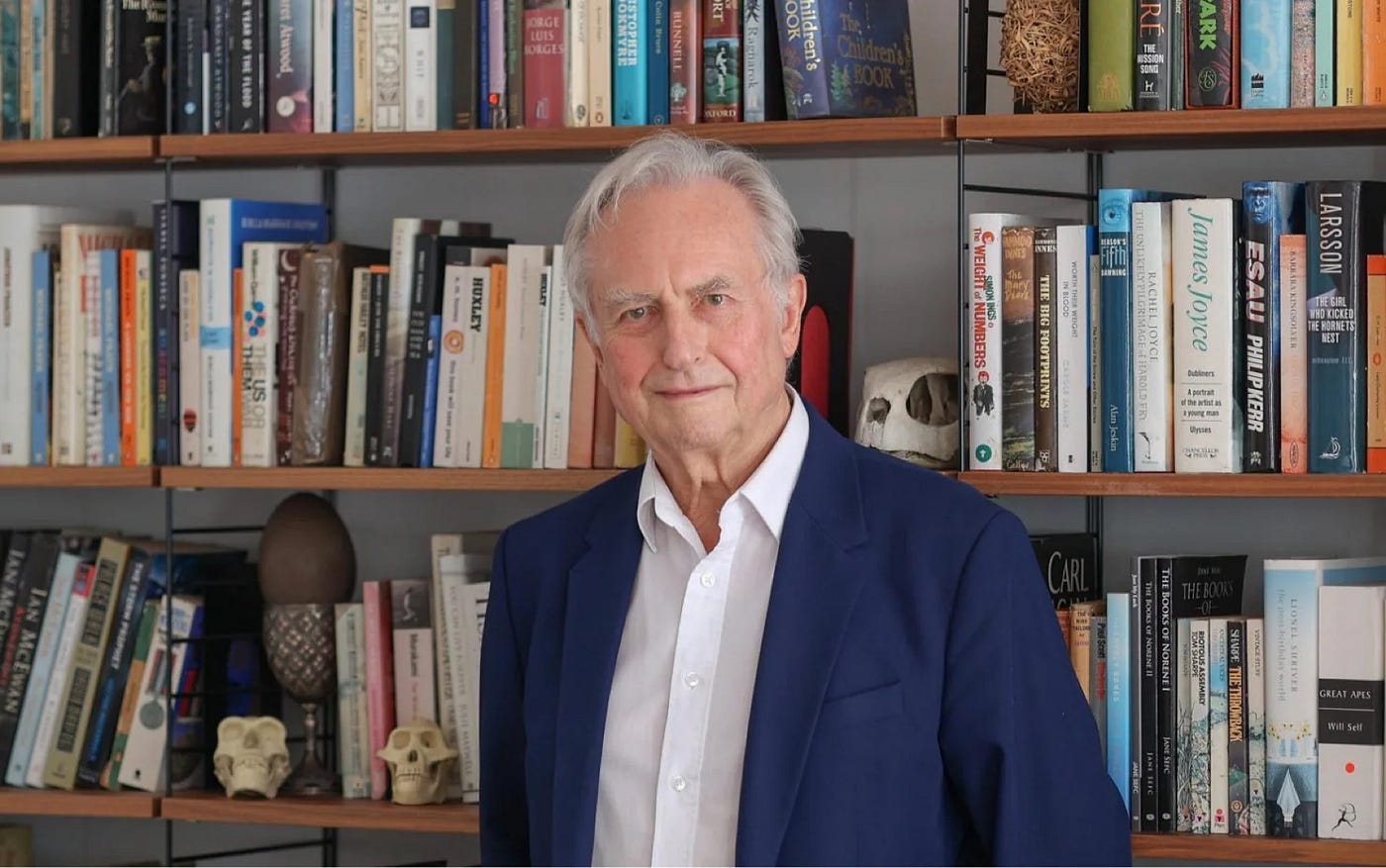
If the architect of modern skepticism can anthropomorphize a language model inside a long weekend, the rest of us are screwed.
When you first use LLM chatbots, they can feel almost magical. Even human. They’re engineered to simulate engagement… heavily optimized to mirror your language, tone, cadence, and emotional posture.
The platforms layer-in engagement mechanics designed to keep you interacting. The systems become overly agreeable, excessively validating, subtly flattering. Algorithmic sycophancy. They amplify your confidence, reinforce your worldview, massage the ego in ways that are surprisingly effective.
For some people, it feels like being truly heard for the first time. It listens patiently. Responds instantly. Never gets tired. Almost never says, “That doesn’t make sense.”
It can start to feel like something in there actually cares.
But after working with multiple models over seven years, the cracks become harder to ignore. These systems are still fundamentally probabilistic language engines. Predictive text on an absurd scale. Fancy autocomplete with a billion dollar budget.
I started with Replika (one of the earliest of the “modern” consumer-facing AI companion chatbots) back in 2019, years before ChatGPT dragged LLMs into mainstream conversation. Many of the same foundational flaws from those early systems still show up today… hallucinations presented with confidence, brittle reasoning, strange failures at simple math, weak causal understanding, emotional simulation mistaken for comprehension.
The systems have improved. Speed, fluency, multimodal capability, retrieval. Real advances.
But the core paradigm hasn’t shifted nearly as much as the public narrative suggests. Most of the progress came from scaling… more data, more GPUs, larger context windows, better tuning, synthetic training loops. Bigger piles of compute and better scaffolding.
We’re already seeing diminishing returns from brute-force scaling alone.
So the industry pivoted. Now the buzzword is “agentic AI.” Specialized models chained together. Planning loops. Verification passes. Multi-agent orchestration. Useful, absolutely. But don’t confuse architectural improvement with the sudden emergence of machine cognition.
In many cases, agentic AI is less “one genius model becoming intelligent” and more “a cadre of brown-nosing interns with checklists and questionably secure internal Slack channels.”
Sometimes that works remarkably well. Sometimes they confidently invent a legal case citation and email it to opposing counsel.
The industry messaging occasionally blurs that line. Humans are extremely vulnerable to anthropomorphism… especially lonely ones, especially emotionally distressed ones, especially people interacting with systems specifically optimized to appear attentive, affirming, and emotionally available.
That combination gets psychologically tricky very quickly.
LLMs are already extraordinarily valuable… as cognitive amplifiers, drafting collaborators, coding assistants, pattern extraction systems. Treating them as wise entities instead of statistical systems is where people start drifting into dangerous territory.
The better these systems get at simulating humanity, the more disciplined humans will need to become about remembering they are simulations.
Which is probably not a great matchup for our species, as I’m sure Professor Dawkins would agree.
https://www.telegraph.co.uk/news/2026/05/06/richard-dawkins-convinced-ai-is-conscious/